
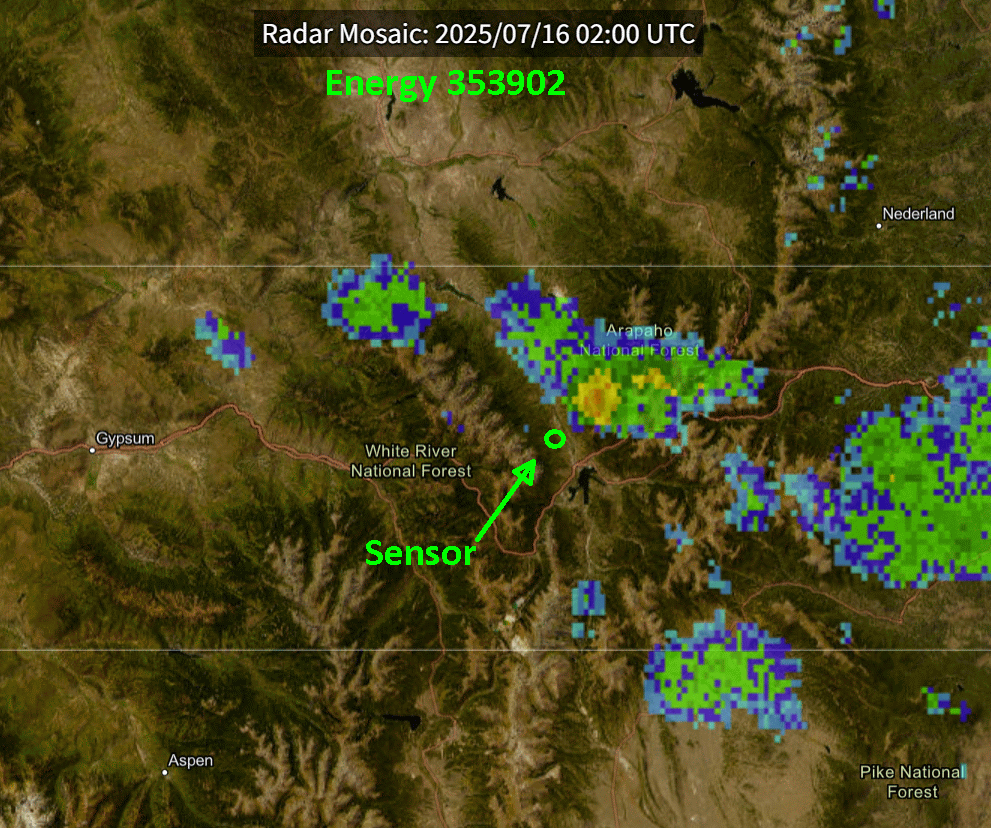
It looks like we have successfully detected lightning (radar map at right) using our spiffy new lightning detector.
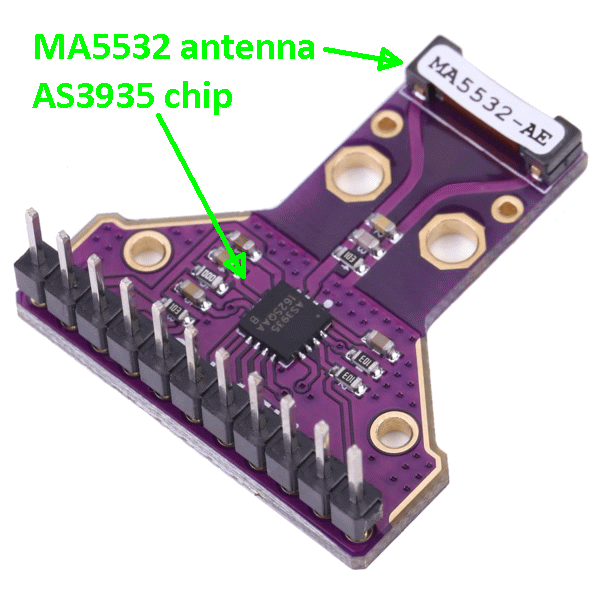
The new toy is shown at right. This small circuit board has an AS3935 Franklin Lightning Sensor IC chip (data sheet), described by its manufacturer as a “programmable fully integrated Lightning Sensor IC that detects the presence and approach of potentially hazardous lightning activity in the vicinity and provides an estimation on the distance to the head of the storm.” The chip is connected to an MA5532 antenna (data sheet) described by its manufacturer as “developed for austriamicrosystems AS3935 Franklin Lightning Sensor IC.”
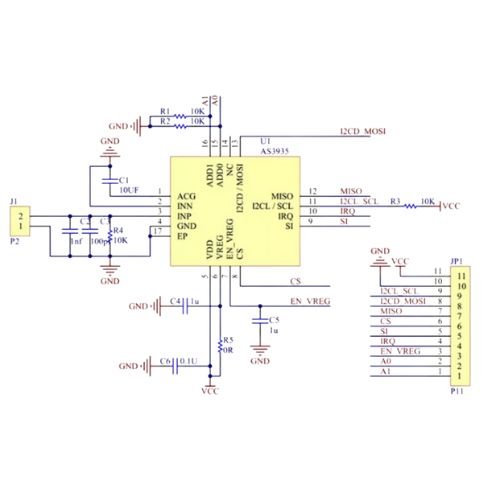
The schematic for this circuit board is shown at right.
One way to describe things is that it detects the EMP (electromagnetic pulse) of a lightning event, and then carries out some analysis on the event to distinguish it from human-caused RF signals. Having decided that the pulse is indeed lightning, it then works out how far away it thinks the leading edge of the storm is, based upon a modeled amount of attenuation as a function of distance. To do this, the chip needs to be told whether the detector is “indoors” or not.
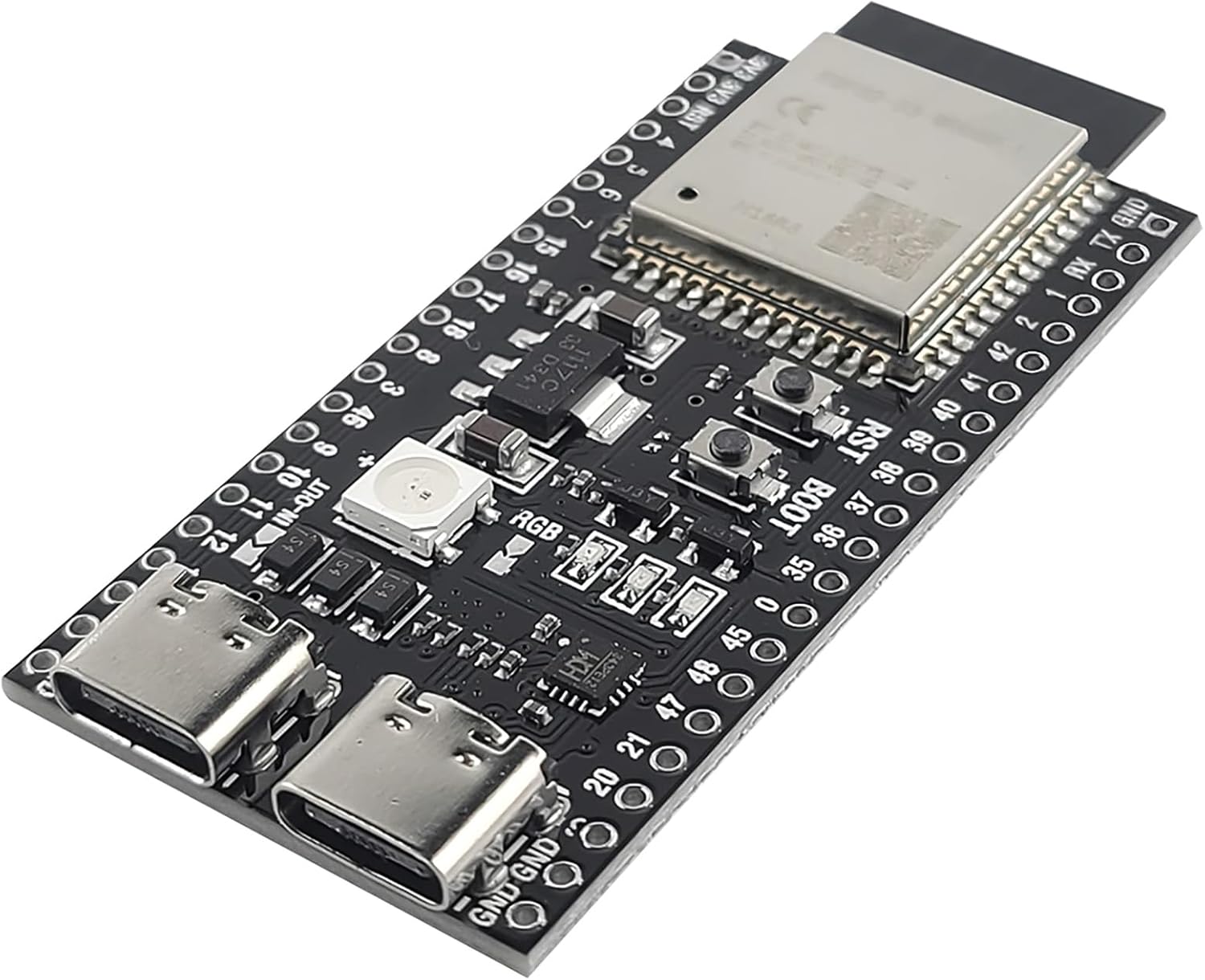
I connected this circuit board to an ESP32-S3 single-board computer (SBC) also shown at right.
The SBC is programmed with ESPHome software (detail page), and it communicates by wifi to our Home Assistant system (detail page). You can see the YAML file that I used.
The lightning detector chip listens for RF (radio frequency) activity at around 500 kHz and analyzes the activity, with a goal of distinguishing between actual lightning on the one hand, and human-caused “disturber” signals on the other hand.
According to the chip’s documentation:
If the received signal is classified as lightning, the energy is calculated. The result of the energy calculation is then stored [and retrieved by the SBC]. This value is just a pure number and has no physical meaning.
Yesterday, two lightning events got detected. At 7:15:13 PM, a first calculated energy number got stored: 447452. About 41 minutes later, at 7:56:55 PM, a second number got stored: 353902.
It turns out that NOAA has a database of historical weather radar images. That is where I got the images quoted in this article.
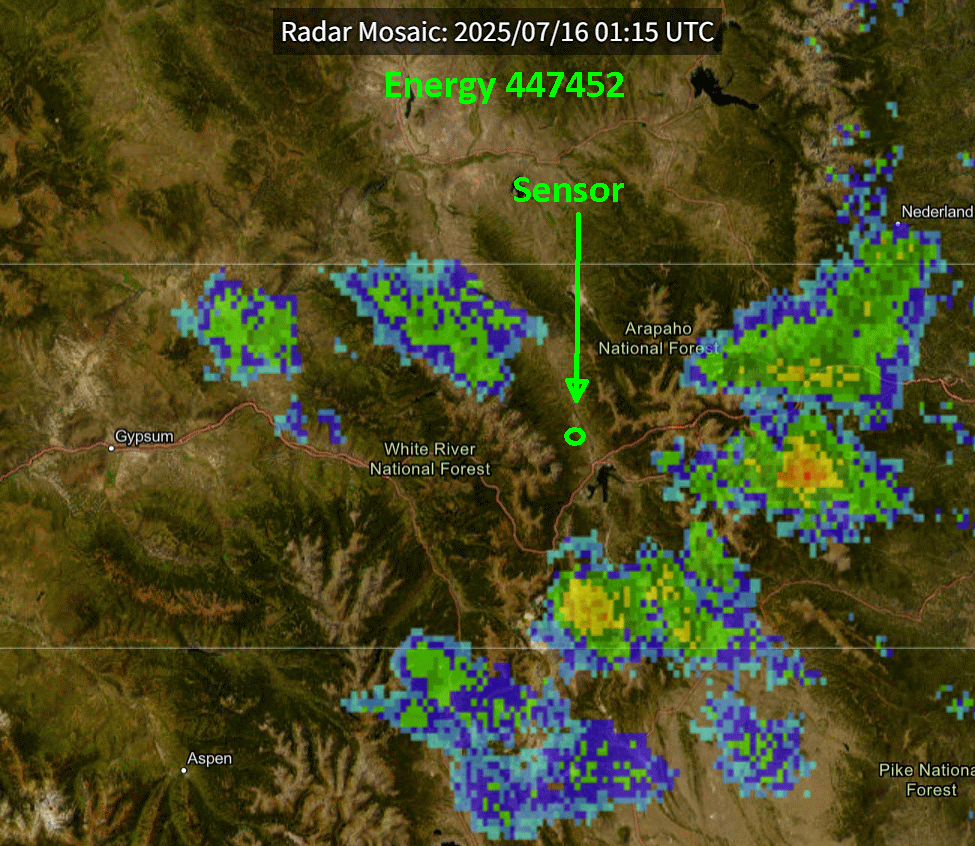
At right is the image for 7:15 PM. You can see storm activity some 20 miles east and 15 miles south of the sensor location.
You can also see the image for 8PM. You can see storm activity about 4 miles northeast of the sensor location.
Antenna orientation? An alert reader asks whether the orientation of the antenna matters. The chip maker offers an application note saying this:
Orientation of the antenna: Since lightning is not discharging straight, but in a zigzag pattern and the distance is very far away, the orientation should not matter.